Frequently Asked Questions About Open APIs: Freedom of Choice for Veterinary Teams
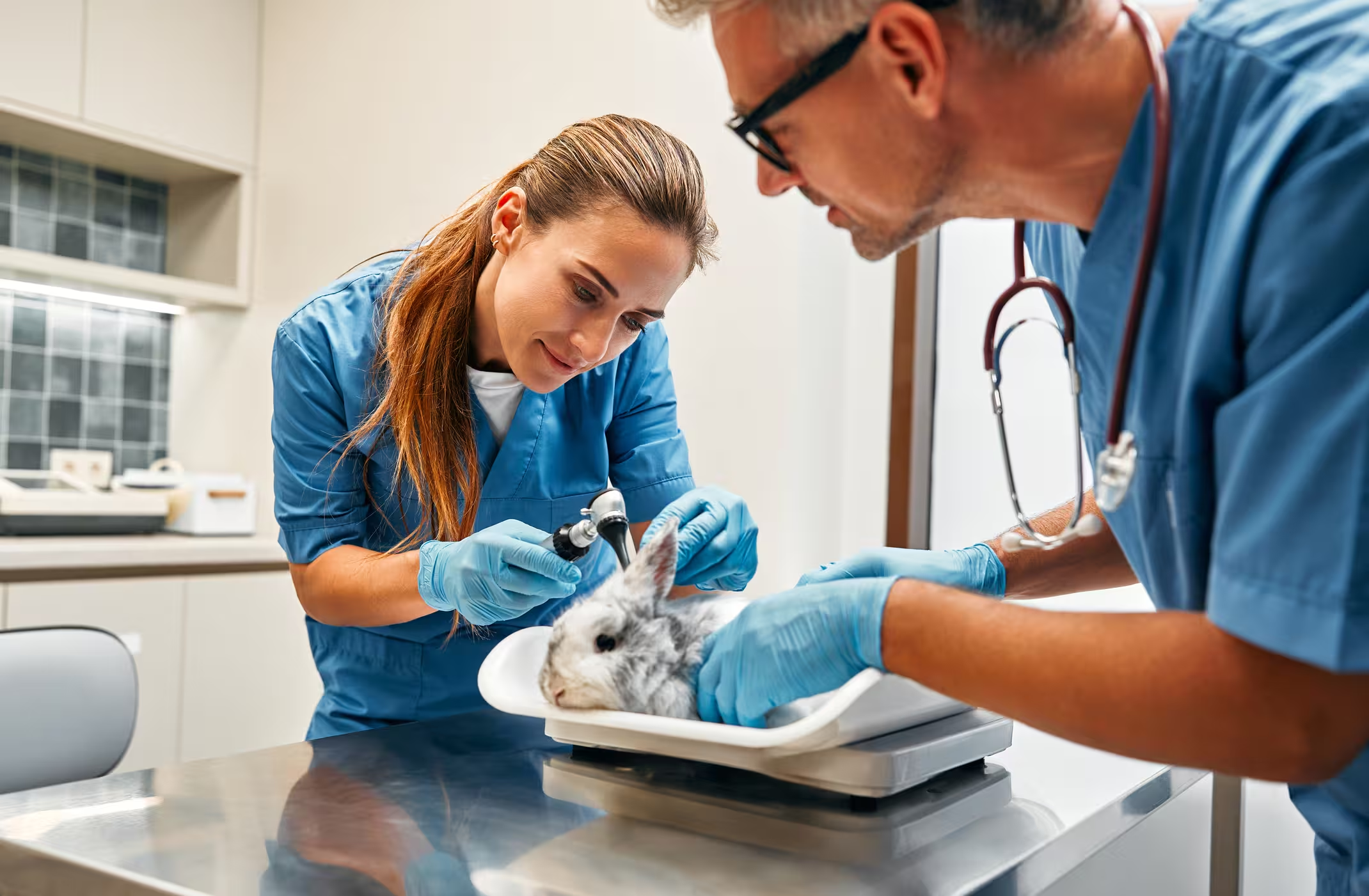
Veterinary clinics use a long list of tools to get through everyday workflows. At a minimum, you likely interact with an imaging system, payment processor, reference laboratory, and client communication platform daily. You may also have systems in place for inventory management, online booking, and built-in payments.
In the ideal scenario, each of these outside systems would communicate seamlessly with your main PIMS. However, this may be a challenge if you have an older system. When your preferred tools operate independently from your hospital software, team members spend extra time copying, pasting, re-entering, editing, and otherwise moving data between systems. Instead of increasing efficiency, this setup can slow your team down.
An open application programming interface (API) is a key software feature that turns your veterinary practice management software into a central hub, allowing information to flow freely to and from integrated apps. We share answers to frequently asked questions about open APIs to help you understand how they can support flexibility, independence, and efficiency in veterinary practice.
What is an API?
An API enables one software system to communicate with another. In a veterinary practice management system, the API defines which external tools can access it and what they can change. Depending on the app, that may include appointments, client and patient information, invoices, or parts of the medical record.
In PIMS with an open API, the PIMS vendor publishes instructions that allow outside companies to connect easily without limiting access or slowing down workflows. By reading and updating information directly inside the PIMS, these tools eliminate the need for time-consuming and error-prone manual data transfer.
How does an open API affect independent veterinary practices?
Independent practices want freedom to choose their own tools. With an open system, practices aren’t limited to their PIMS-branded communication, booking, payment, or reporting tools. They can connect the tools that fit their team and clients, and they have the flexibility to change technology tools as needed.
How does an open API help larger practice groups and multi-location veterinary hospitals?
Multi-practice veterinary groups need software that helps them analyze performance data across all locations. When a group or corporation chooses software with an open API, they allow member practices to maintain their individuality through custom veterinary software integrations, while preserving the comprehensive, system-wide reporting features they need to run the business. Additionally, developers can build one connection that works across many locations.
What is an open ecosystem in veterinary software?
An open ecosystem is another way to describe software with an open API that enables PIMS and external programs to exchange data in both directions. An open ecosystem is important to Provet because we believe veterinary practices shouldn’t be limited to a single product brand chosen by their PIMS – they should have the freedom to choose their tech stack based on their unique clinic and team needs.
What are some other benefits of an open API?
Aside from freedom of choice, other benefits teams enjoy when using an open ecosystem include:
- Auto-populated schedule, confirmations, communications, and tasks on a central PIMS dashboard
- Greater hospital efficiency with less time spent on data entry
- Fewer medical record transcription errors
For specialty and emergency hospitals, advanced treatment capabilities and technology are critical to patient outcomes. With an open system, niche practices can use their parent company’s preferred PIMS while also connecting to discipline-specific apps and services necessary to serve their specialty clientele.
How do open APIs support AI tools?
An open API is a critical feature of platforms that can accept AI integrations and adapt as the technology advances. Medical record scribes, the most widely used AI platforms, must communicate directly with a practice’s PIMS to benefit veterinary teams. Otherwise, the extra work of copying and pasting the AI transcript would negate any positive benefits.
Open ecosystems give veterinary practices a more flexible, efficient, and resilient tech strategy. When your PIMS connects directly with the tools your team relies on, you keep ownership of your data, protect your independence, and support workflows across a variety of veterinary hospital types and needs.
The Provet approach to application programming
Provet builds practice management software around the concept that practices should own and control their own data, and that collaborative, open ecosystems are critical to flexible veterinary software integrations and innovation.
Call to schedule a demo with our team to see how veterinary practice management software that prioritizes flexibility, freedom, and strict security standards can work for you and your team.
Key takeaways
- Open APIs give veterinary practices freedom to choose and change the tools connected to their PIMS, rather than being locked into a single vendor’s ecosystem.
- An open ecosystem turns your PIMS into a central hub for imaging, payments, labs, communication, and specialty tools, reducing manual data entry and lowering the risk of errors.
- Open ecosystems support custom workflows for independent clinics, multi-location groups, general practices, specialty clinics, and emergency hospitals by allowing the addition of integrations and AI tools as needs evolve.
Related articles

The CMA Vet Investigation: Thoughts From UK and US Veterinarians
September 3, 2026
A Practical Guide to Vet Payment Processing for Busy Clinics
September 3, 2026

Veterinary Booking Software: How to Fill Your Calendar and Cut No-Shows
September 3, 2026